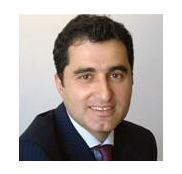



STRIKING THE MATCH.

Liquidity is a scarce commodity these days but Liquidnet believes there are more opportunities than closed doors. John Barker tells Best Execution why.
Can you tell me the background to Liquidnet
Liquidnet started as a “Eureka!” moment at 4 am in 1999 when Seth Merrin, founder and chief executive officer, came up with the concept of capturing institutional block orders. He spent the next couple of years, asking people in the industry to either ratify or pull apart his idea. The reception was good and he launched the company in the US in April 2001. It was successful from day one mainly because of the simplicity and ease of use of the product. Three clicks of a mouse and the buyside trader was able to trade shares anonymously and efficiently.
In 2002, we went live in Europe, initially focusing on the UK, France, Germany, the Netherlands and Switzerland, and in 2007, we went into Asia, where we are currently in the core five markets – Hong Kong, Singapore, Australia, Japan and Korea. Altogether we are in 29 markets and in many ways, the business has developed in a typically West to East pattern. Historically, the US is ahead of the UK by about two to three years which is a year ahead of Europe, which is turn is about five years ahead of Asia. However, in this case, the Asian markets were more technologically advanced than Europe. The buyside had already adopted direct market access (DMA) and order management systems. (OMS).
What has been the impact of the financial crisis?
The whole financial community has suffered and we are no exception. We had grown 100% year on year from 2003-2007 but last year Europe’s principal trading grew by 24% as compared with 2007. While this figure is much lower than we had forecasted at the beginning of the year, we still believe it is good against the current backdrop. Looking ahead, if Europe’s main share indices continue to perform poorly, then principal traded is likely to be flat in 2009.
The group that has been the most impacted is the investment banks. For example, we have not been affected in Europe by the withdrawal of hedge fund activity as our business is only focused on asset managers. Going forward, there will be opportunities for us and we think this could be the age of the agency broker although not all will survive. We are not resting on our laurels and will continue working closely with the buyside to deliver new products, develop existing products and expand into new markets as well as add new functionality.
Which new markets are you looking at?
We are still working our way through Europe and we currently have a healthy pipeline of new client members, with about half a dozen ready to go live. This year we are targeting the asset managers in Germany, France, Switzerland and Italy where we have already started to build relationships. To this end our sales team has recently hired Raj Samarasinhe who speaks several languages and has a good understanding of the different markets. In terms of the markets we provide access to, we expect to have Turkey, Slovenia and Poland on the system in the next couple of months.
What new products and services do you expect to introduce?
We just added Luxembourg-listed Global Depositary Receipts (GDRs) to the system. Initially, there will be 97 GDRs available to trade, all of which are issued under Regulation-S, US dollar traded, and settled via Euroclear. This range complements the LSE-listed Reg-S GDRs, AIM securities, exchange traded funds, contracts for difference and equities from 29 global markets that are already available. Looking ahead, we plan to introduce our new liquidity streaming product called H2O, which was launched in the US about four years ago. The product aggregates fragmented market liquidity and enables clients to interact with the liquidity of other streaming liquid partners. Unlike the main buyside-only pool, it contains flow from non-buyside sources such as broker-dealers and alternative trading platforms. Effectively, these partners provide more liquidity to the Liquidnet pool but buyside control is maintained whilst anonymity and minimal market impact are protected.
We also plan to get our programme trading desk up and running and introduce a transaction cost analysis service in Europe. The desk will be an electronic trading service that uses algorithms to access liquidity both on our own trading platforms and others. I think that large orders will go to the block desk while smaller cap orders will go to the programme- trading desk.
In addition, we are looking to expand our counterparty exposure monitoring process, which we launched in the US late last year. Counterparty risk has become very important since the collapse of Lehmans. This platform collects trade data from various systems and generates a report that allows the firm to look at exposure at the prime broker or custodian level.
There have been dramatic changes thanks to MiFID and the financial crisis. Where do you see your place in the landscape?
Liquidnet reinvented and redefined the institutional marketplace and we really do not see any competition in our space. We see exchanges and MTFs as partners but we differentiate from them in that we bring external liquidity to only the buyside. The main objective is to help the buyside enhance the quality and speed of trade execution, gain price improvement for their trades, and lower the overall trading costs.
What do you see as the biggest challenges this year?
I think we can expect another six months of bad economic news and I would not be surprised to see another big name go. However, we remain positive about our business model and growth opportunities. The buyside feels very comfortable with our model and this will hold us in good stead in the future. There are so many opportunities for agency brokers and the biggest challenge is in delivering the products and services we discussed on time and on budget. The other important thing to do is to get in front of the asset management community and understand what their requirements are.
[Biography] John Barker is managing director, Liquidnet, responsible for the EMEA region. Previously, he was head of equity operations at Tokyo-Mitsubishi International — a Japanese international bank based in London — and head of trade support for Deutsche Bank. From 1988 to 1998, Barker was director of operations at Instinet Global Services. Before 1988, he held leadership roles at Yamaichi International (Europe) and Midland Bank/HSBC. ©BEST EXECUTION

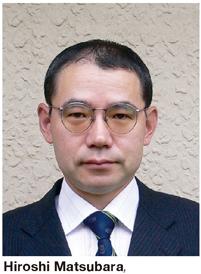
 The rate at which the markets have adopted alternative trading venues, is a vivid illustration of the way the capital markets are changing. The singlemarket environment has disappeared in the US and Europe, with venues like BATS creating a credible alternative to traditional exchanges. As a result, in the US, more than 40 execution venues, including incumbent exchanges as well as the new electronic crossing networks (ECN) and alternative trading Systems (ATS), compete with each other for share of order book trades. The growth of ATSs is such that they now have more than 30 percent of the trading share in US equities.
 However, it is important not to over-state the current levels of development. Although the share of off-the-floor trading taken by alternative execution venues and broker principal bids is gradually increasing and now covers around 7 to 8 percent of total volume, fragmentation is still in its infancy in Japan, as is the adoption of Smart Order Routing.
 2009年年初から2月に入る中で、日本の株式市場は、東京証券取引所の1日当りの売買代金が2兆円割れするという売買の低迷が続いており、流動性リスクが懸念される。また、東京証券取引所の売買代金シェアは、日本の全市場の約90%超と一極集中の状況が長年続いており、多数の参加者が一カ所に過度に集中し希望する価格で取引が迅速に行われづらい売買リスクも考えられる。このような情勢の中、2008年より市場外取引に新たに複数の高度な私設取引システム(PTS)が誕生してきており、1つの銘柄の複数の値段の中で、より有利な値段を選び取引を行う高度な電子化された「最良執行(Best Execution)」が定着し始めた。
 While the global financial crisis has inevitably had an impact on investment, most commentators seem to agree, that the Asia Pacific market will see on-going development, particularly as it continues to invest in the infrastructure and technologies, that will allow it to match its US and European counterparts, in key areas such as execution speed, easier market access and direct data feeds.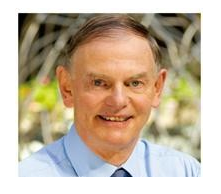
 With only weeks to go until Canada’s leading electronic trading event, it is still hard to pick what the credit crisis and regulatory environment will look like on June 1st, the first day of the conference. What we do know is that there will be increased regulatory involvement, particularly in areas that were previously not subject to scrutiny. In the run up to the event, we asked a range of experts to comment on what they feel will be the hot topics at this year’s event.
 The current financial crisis could be described as a disaster waiting to happen. At too many institutions the basic tenets of good long term risk management were being ignored in favour of short term profits. A lack of transparency meant many investment bank boards and executives did not fully understand the risk their firms were assuming with complex new instruments. As a result, they were not able to properly assess the return they were getting for them.